Languages


- Cheese starter kits
- Dairy equipment
- Accessories and small equipment
- Cheese molds
- Molds for butter
- Rennets
- Starter cultures
- Moulds starters
- Starter cultures for yoghurt, kefir and probiotics
- Excipients, enzymes, salt
- Cheese coatings
- Packaging
- Pots, pans
- Transport and milk collection (churns, milking cups, containers, canisters)
- Zootechnics, animal husbandry
- Yoghurt makers
- Fruit Preparations
- Toppings and additives for ice cream, desserts, and cakes
- Spices
- Smoking
- Milking machines
- Elegant cheese boards and cutting boards
- Protective clothing, detergents, health and safety
- Services - logos, labels, leaflets, etc.
- Serowar.pl Sweets
- New products
- On sale
Payments

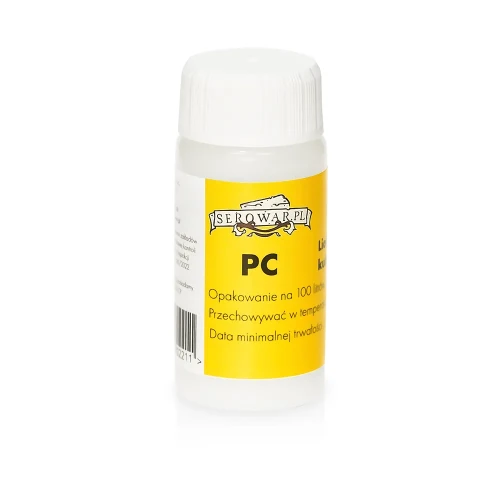
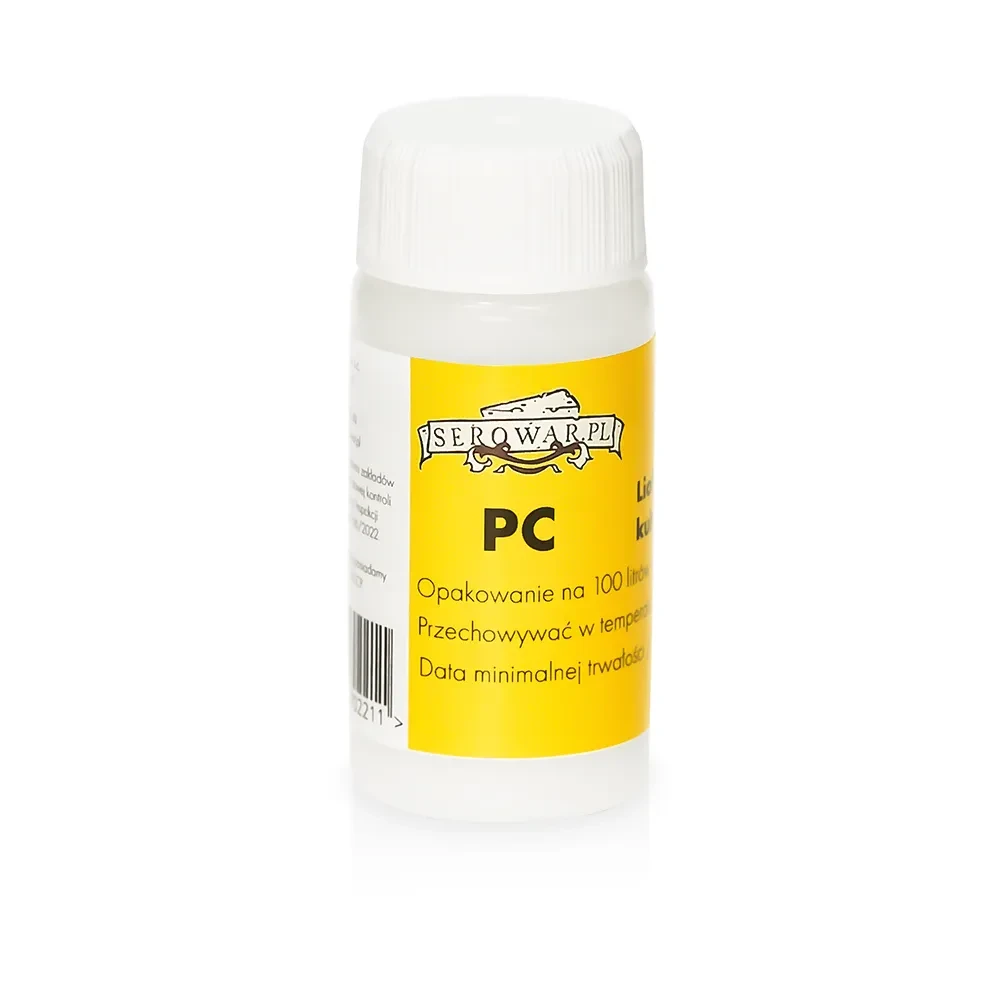
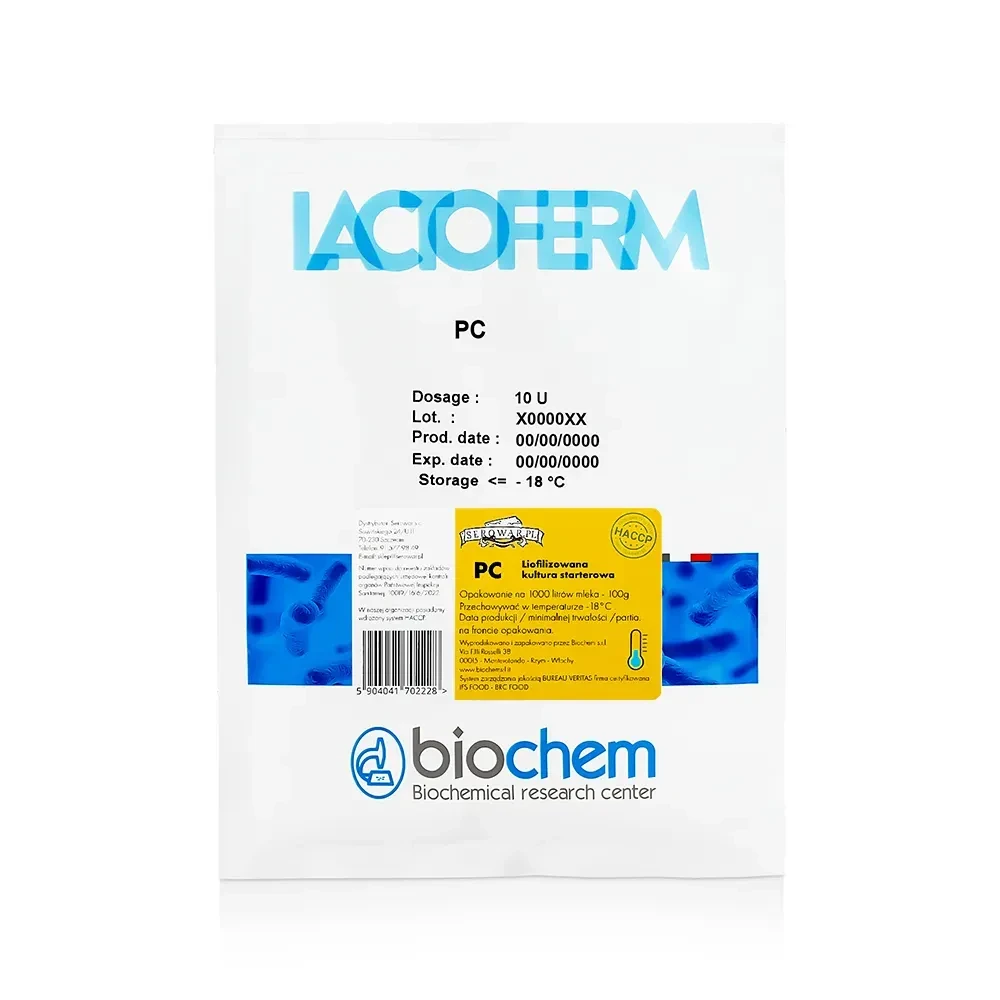
PC - mould Penicillium candidum
Regular price:
product unavailable
add to wish list
Description
PC – white rind and the character of Camembert- and Brie-type cheeses
PC from the Aroma-Tek series is a concentrated, freeze-dried Penicillium candidum culture for direct milk inoculation. It is intended for white mould-ripened cheeses, including Camembert and Brie.
The role of the culture in cheese ripening
The white growth gives cheeses their characteristic appearance, but the culture does more than cover the surface. It contributes to ripening, flavour development and changes in cheese texture. Lactic acid breakdown helps soften the acidic taste and influences further ripening conditions.
Rapid growth of the desired mould helps limit unwanted moulds. In Camembert- and Brie-type cheeses, drainage, salting, surface care and ripening conditions also shape the result. Follow the recipe for these stages to develop the intended rind and consistency.
Use together with a suitable acidifying bacterial culture selected for the cheese recipe.
Composition
Penicillium candidum
Available packs
- 10 g vial — for 100 litres of milk.
- 100 g sachet — for 1000 litres of milk.
Concentrated culture in freeze-dried powder form. The smaller pack is a screw-top vial from which the required portion can be measured before closing it again.
Applications
Before use, disinfect the packaging and the tool used to open it. When measuring portions, protect the contents from moisture and contamination.
Direct milk inoculation
Add the culture directly to milk without preliminary activation. Mix thoroughly to distribute the preparation evenly.
Spraying the cheese surface
Dissolve the dose intended for 100 litres of milk in 0.5 l of boiled water cooled to 20°C. Keep the same proportions for other quantities. Dry the cheese surface and spray according to the recipe used for production.
Culture characteristics
- Optimum growth temperature: 28–32°C
- Gas production: ++
- Proteolytic activity: ++++
- Fermenting activity: −
- Salt tolerance at 50% inhibition of activity: 3.5% NaCl
The optimum growth temperature describes conditions for culture growth — temperatures throughout the production process must follow the recipe.
Storage and transport
After measuring a portion, close the pack tightly and protect the contents from moisture. The culture withstands higher temperatures during transport.
Related products
MST - starter culture (bacteria)

High-precision pocket scale (0.01 g)

Sprayer for mould-ripened cheeses 10ml
 Inni klienci kupili również


€2.33

€4.65