Cheese maturation
Cheese maturation

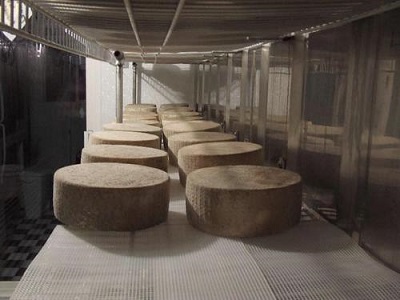
During this stage, cheese develops the flavour and character typical of its variety. Maturation can take a few days or as long as six years. The temperature and humidity of the room where the cheese rests must be carefully controlled. The right temperature is very important for the development of the bacteria added to the milk at the beginning. Their growth provides sufficient acidity to preserve the cheese. Most cheeses need a temperature of 8–16°C and a fairly humid environment, at 75–95% relative humidity. A key part of maturation is the continuous exchange between gases released by the cheese, including carbon dioxide and ammonia, and oxygen in the atmosphere.
read more »
Determining the start of coagulation and when it is complete

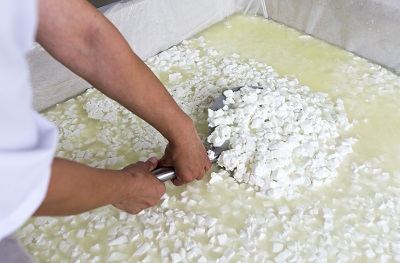
Rennet is an enzyme that causes proteins to coagulate. It is available in two forms:

  • Animal rennet comes from the stomach of a calf or lamb fed on its mother’s milk.
  • Vegetarian rennet, also known as microbial rennet, contains no animal protein.

Curd is the firmer, thicker form of milk obtained after adding rennet. It contains most of the proteins present in milk, as well as fat.

read more »
Paraffin-coating and waxing cheese

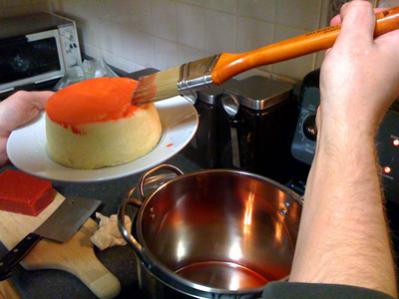
Once the cheese is dry, it can be coated with food-grade paraffin to prevent excessive moisture loss and delay mould growth during maturation.

Some cheeses, such as Swiss cheeses and Parmesan, have a naturally thick rind and are not paraffin-coated. However, even these varieties may be coated if they weigh 1 kg or less, to prevent excessive drying and unwanted hardening.

Before coating, chill the cheese in the refrigerator for a few hours so that the paraffin adheres better. Heat the paraffin in a water bath, preferably on a cooker with an extractor hood. The vapours are highly flammable, so take care when melting it. To help prevent unwanted mould, wipe the cheese with a cloth lightly dampened with vinegar and let it dry on a clean surface.

read more »
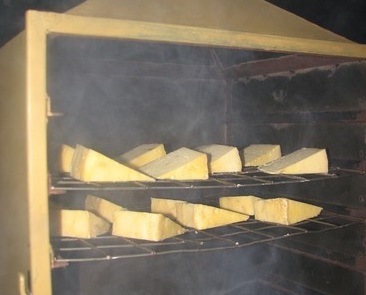
Smoking cheese
Smoking cheese

Smoking is a way to enrich the flavour of cheese.

As smoke evaporates moisture, it brings fat to the surface of the cheese. Combined with smoke, this fat has a preservative effect, provided the cheese is kept dry. Smoking gives cheese an interesting flavour and a beautiful golden colour. Note: only apply paraffin or cheese wax after smoking is complete.

The key principle is a low fire. The cheese should not heat up, as this may cause fat loss. Instead, it should hang in a smoke-filled room at a temperature no higher than 4.5°C. Oak and apple are the best woods.

read more »
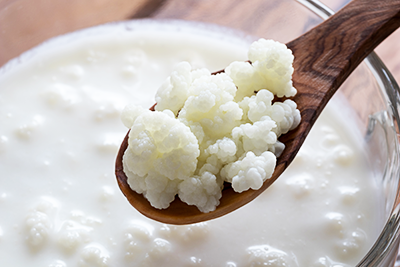
Kefir grains versus a freeze-dried starter culture

What are the differences between traditional kefir grains and a freeze-dried kefir starter culture? Both products are used to ferment milk and make kefir, but they differ significantly. Here are the key points:

1. Microbiological composition

Kefir grains

  • A living, natural symbiosis of lactic acid bacteria, acetic acid bacteria and yeasts.
  • Usually contain a much wider diversity of microorganisms than dried cultures.
  • The strains may change slightly depending on cultivation conditions.

Freeze-dried starter culture

  • A blend of selected bacterial strains, sometimes with a small amount of yeast.
  • The composition is precisely controlled and consistent.
  • Less diverse than kefir grains, but the results are stable.
read more »
What are starter cultures and why are they essential in dairy production?

What are starter cultures and why are they essential in dairy production?

Starter cultures are one of the most important elements of dairy technology, in both industrial and artisan production. Although invisible to the naked eye, they determine whether milk becomes a delicate yoghurt, fresh curd cheese or a matured cheese with a complex aroma and texture.

Without starter cultures, controlled fermentation would not be possible, and dairy products would be inconsistent, short-lived and difficult to reproduce.

What exactly are starter cultures?

Starter cultures are selected strains of lactic acid bacteria added to milk in precisely defined quantities and under appropriate processing conditions. Their main task is to initiate fermentation by converting lactose into lactic acid.

read more »
up
Shop is in view mode
View full version of the site
Sklep internetowy Shoper Premium