Languages


- Cheesemaking kits
- Dairy equipment
- Accessories and small equipment
- Cheese moulds
- Butter moulds
- Rennet
- Bacterial starter cultures
- Mould starter cultures
- Yoghurt, kefir and probiotic cultures
- Processing aids, enzymes and salt
- Cheese coatings
- Packaging and packing
- Pots, stockpots and saucepans
- Milk cans, buckets, tanks, containers, crates, insulated boxes, tubs and bowls
- Animal husbandry and livestock farming
- Yoghurt makers
- Fruit preparations
- Toppings and ingredients for ice cream, desserts and cakes
- Spices and herbs
- Smoking
- Milking machines
- Cheese boards, chopping boards and knives
- Protective clothing, cleaning products and workplace safety
- Services - logos, labels, leaflets, etc.
- Serowar.pl fudge sweets
- New products
- On sale
Payments

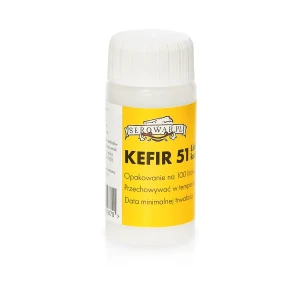
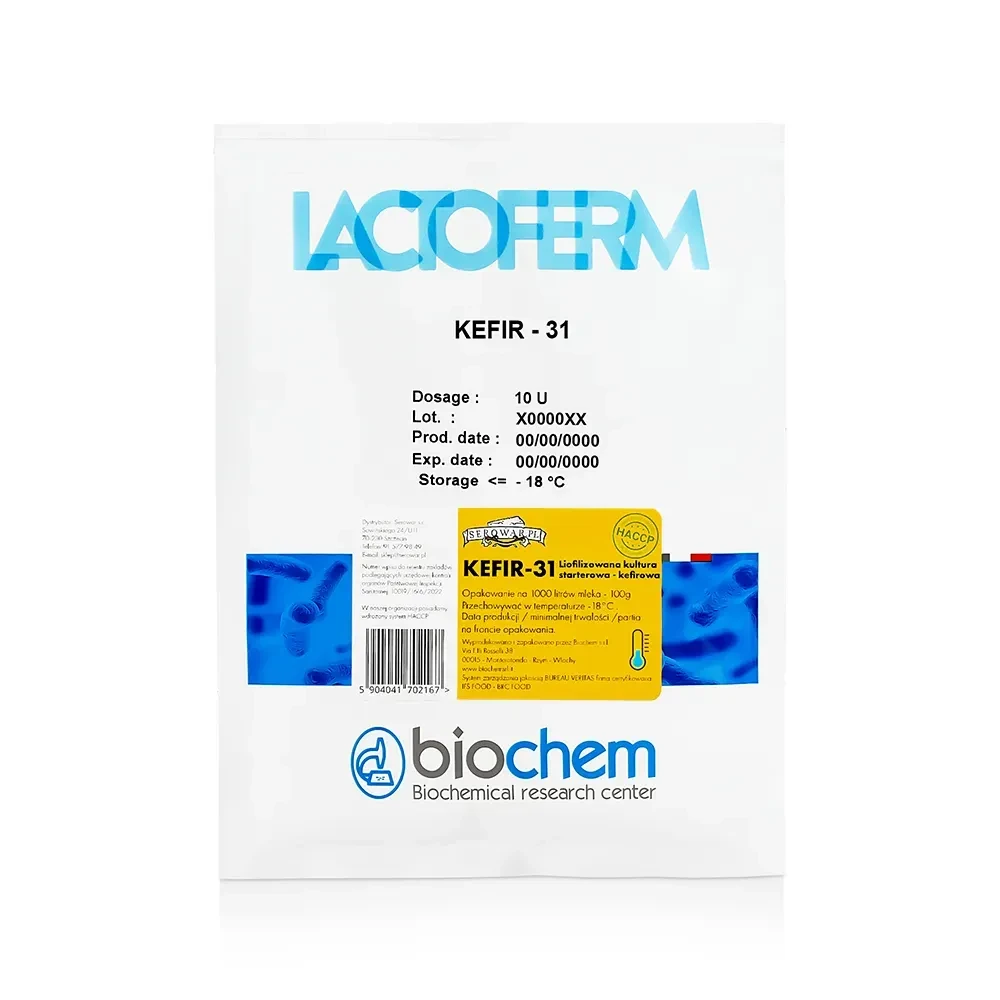
Kefir 31 - starter bacteria for kefir
Regular price:
product unavailable
add to wish list
Description
Kefir 31 – a culture for kefir and sour milk
Kefir 31 from the YoghurtTek Kefir series is a mesophilic culture for direct milk inoculation. It contains bacteria and yeasts that work together in developing characteristic kefir. Applications include kefir and sour milk.
Fermentation and product character
Acidity, odour and consistency develop during fermentation. The result depends on culture selection, milk preparation and process conditions. Distribute the preparation evenly and match the time and temperature to the recipe.
Kefir 31 contains Saccharomyces cerevisiae yeast. The blend characteristics rate gas production at two plus signs, viscosity at three and odour at four. Consider these properties when planning the finished beverage character.
Composition
- Lactococcus lactis subsp. cremoris
- Lactococcus lactis subsp. lactis biovar diacetylactis
- Leuconostoc mesenteroides subsp. cremoris
- Lactobacillus delbrueckii subsp. bulgaricus
- Saccharomyces cerevisiae
Freeze-dried culture for direct use
The preparation is a dry, freeze-dried powder. The culture is added directly to milk, making it convenient for both small batches of cheese and larger-scale production.
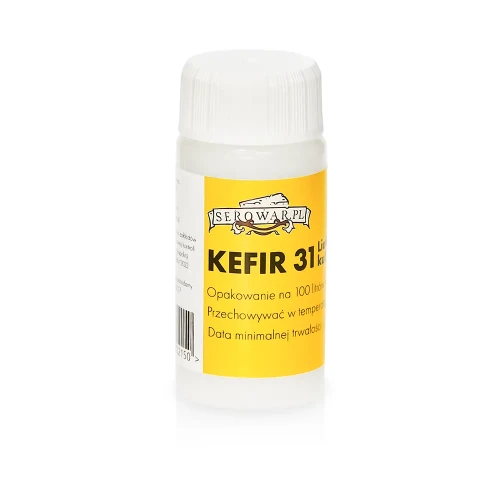
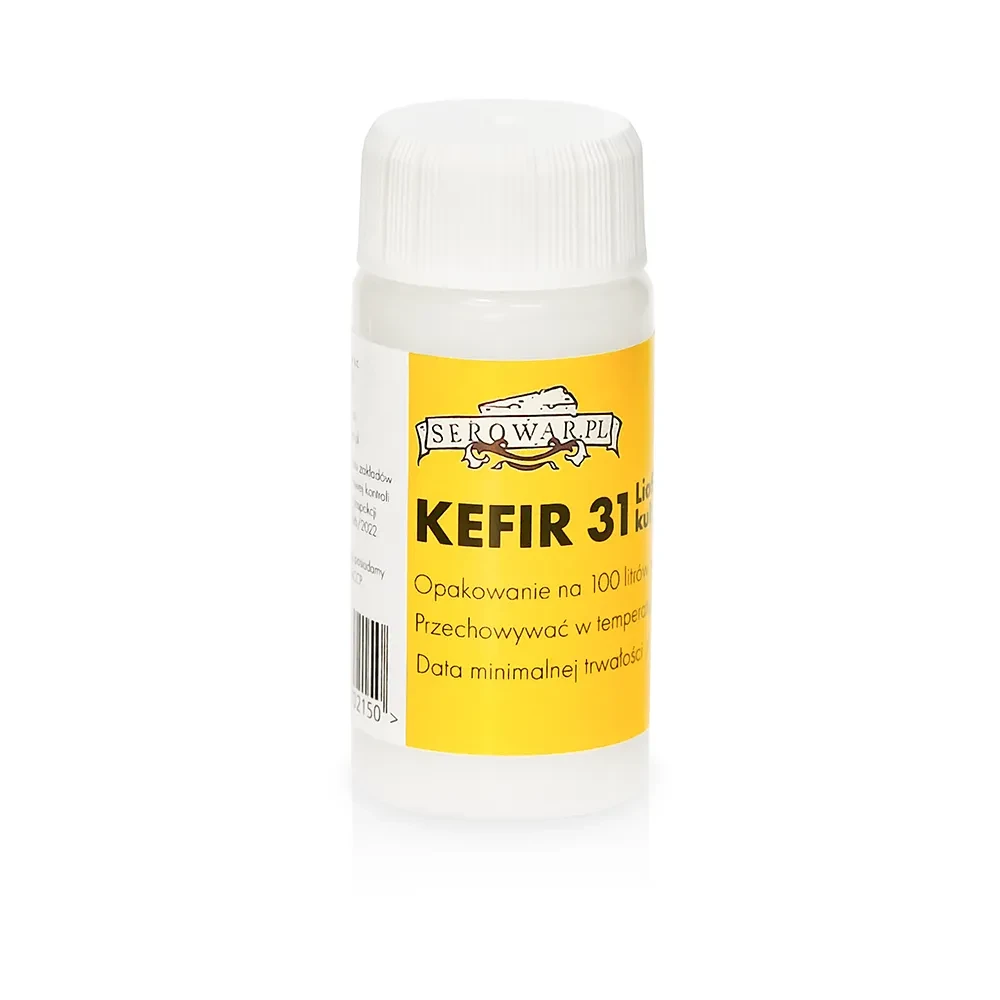
The smaller pack is a screw-top vial. It allows the required dose to be dispensed and the container closed again. Maintain hygiene when measuring and protect the contents from moisture.
Directions for use
Add the culture directly to the milk intended for production. Stir for a few minutes to distribute the preparation evenly. Adjust the dose to the milk volume in accordance with the product dosage.
Available packs
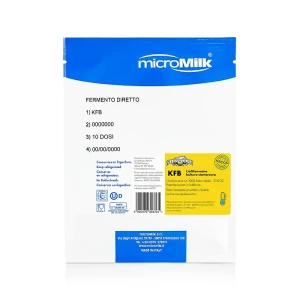
- 10 g vial — for 100 litres of milk.
- 100 g sachet — for 1000 litres of milk.
Choose the variant to suit the planned volume of milk.
Culture characteristics
- Optimum growth temperature: 30–34°C
- Gas production: ++
- Fermenting activity: ++
- Viscosity: +++
- Odour: ++++
- Fluidity: −
The optimum growth temperature describes conditions for culture growth — temperatures throughout the production process must follow the recipe.
Storage and transport
After measuring a portion, close the pack tightly and protect the contents from moisture. The culture withstands higher temperatures during transport.
Related products
High-precision pocket scale (0.01 g)

1.5 L cheese and yoghurt maker with temperature setting
 Inni klienci kupili również